Table of Contents
Textbook of Fake Documentaries is a rare guide from Kōji Shiraishi on fake documentary filmmaking. What insights does it share about found footage and his approach to horror? What makes films like Noroi feel so immersive?
Let’s take a closer look.
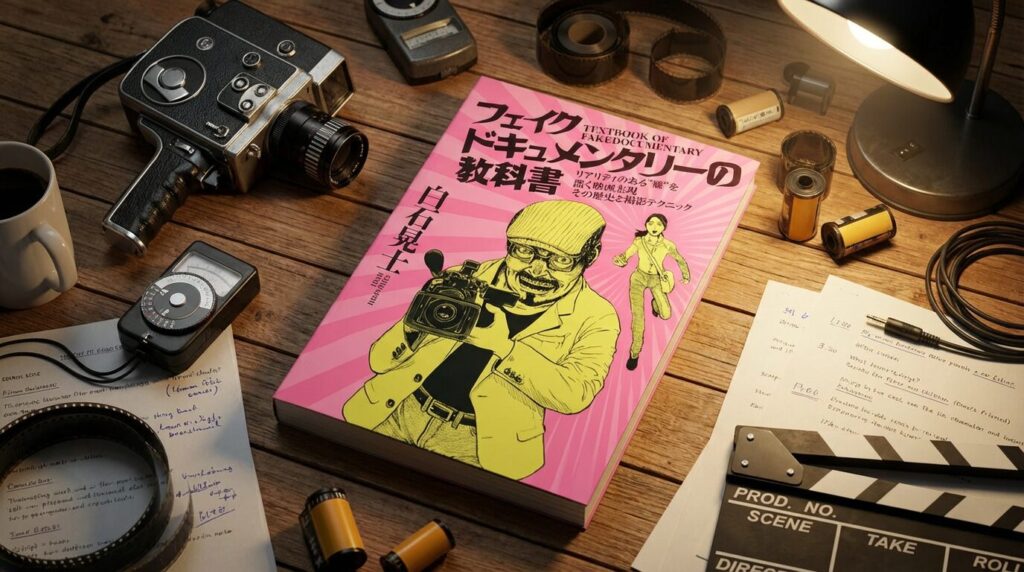
Textbook of Fake Documentaries is the kind of book that immediately gets our attention. For those of us who have always loved found footage cinema, there is something deeply compelling about a form that can feel more real precisely because it gives up so much. Strip away the polished lighting, remove the obvious set design, reduce the feeling of “constructed cinema,” and sometimes what remains can be far more immersive than a traditionally shot horror film.
That’s the strange power of found footage when it really works.
At its best, it doesn’t just show us a story. It makes us feel like we’re inside it. The distance between the audience and the screen gets thinner. We stop watching from the outside and start experiencing the film from within, through the logic of the camera, through the instability of the image, through the unease of whoever is still filming when they probably shouldn’t be.
Some filmmakers built a career on one major found footage success. Others turned that language into something personal, recognizable, and deeply their own. In Japanese horror, very few directors embody that better than Kōji Shiraishi.
Who is Kōji Shiraishi?
Kōji Shiraishi is one of those directors who feels instantly recognizable if you’ve spent enough time with his work. His films move through horror, exploitation, urban legend territory, supernatural dread, and occasionally more mainstream genre spaces, but there is always a clear authorial instinct behind them.
He understands something that a lot of found footage filmmakers miss.
Fake documentary is not just a style. It is not just shaky camerawork, awkward framing, or people yelling into a lens. It is a complete cinematic logic. The camera has to belong there. The performances need to feel observed rather than staged. The editing has to create the illusion of evidence, not spectacle. The fear has to emerge from accumulation, not just from isolated shocks.
That’s what makes Shiraishi such an important figure in this space.
His filmography is full of cult titles that horror fans continue to rediscover, from Ju-Rei: The Uncanny and Occult to Cult, A Record of Sweet Murder, and the Kowasugi! series. But of course, when his name comes up, most fans immediately think of Noroi: The Curse, and for good reason. It remains one of the strongest examples of how fake documentary horror can feel genuinely expansive, eerie, and methodical rather than just chaotic. We’ve always loved Noroi because it feels built, not improvised in the lazy sense. It understands rhythm, texture, and how to make fragments feel cursed.
That matters a lot when talking about this book.
Because if there is any filmmaker whose process we want to hear about when it comes to fake documentary, it’s him.
What is Textbook of Fake Documentaries?
Published in Japan in 2016 by Seibundo Shinkosha, Textbook of Fake Documentaries (フェイクドキュメンタリーの教科書) appears to be one of the rarest and most desirable filmmaking books for fans of found footage horror, pseudo-documentary cinema, and Kōji Shiraishi’s work in particular.
Based on the information currently available, Textbook of Fake Documentaries appears to cover a wide range of topics related to the form.
Among the things that seem to be included:
- an overview of fake documentary terminology and history
- reflections on how the form developed over time
- Shiraishi’s personal directing approach
- practical shooting methods
- editing techniques, reportedly illustrated with images
- character construction within pseudo-documentary storytelling
- material on the Senritsu Kaiki File Kowasugi! series
- a detailed breakdown of A Record of Sweet Murder
That last point is especially interesting.
A Record of Sweet Murder is one of the clearest examples of Shiraishi working with tension, performance, and spatial control in a way that feels both raw and very calculated. If the book really opens up that process, it could be incredibly useful not just for horror fans, but for young directors trying to understand how “messy” cinema is often the result of very deliberate decisions.
The DVD appears to include:
- a short original film by Kōji Shiraishi, around 17 minutes long
- a practical making-of or introductory feature, around 30 minutes, focused on fake documentary shooting and editing
Some of the most interesting Shiraishi techniques
Even from the translated fragments and summaries that have surfaced online, a few of Shiraishi’s ideas are already incredibly revealing.
And to be honest, they make perfect sense if you’ve watched his films closely.
Do not over-script the dialogue
One of the most interesting points is that he reportedly does not prepare every line with rigid precision. Instead, before shooting, he gives actors a verbal direction along the lines of “say something like this.”
That’s a smart approach.
If actors cling too tightly to written dialogue, especially in fake documentary, the performance can start to feel false very quickly. The goal is not random improvisation. The goal is controlled naturalism.
Structure still matters
At the same time, Shiraishi does not seem to believe in total improvisation either.
That’s important.
There is a common misconception that found footage should just be loose and chaotic, but that often leads nowhere. Without a clear script or at least a strong structure, the shoot becomes longer, weaker, and shapeless. Good fake documentary often feels spontaneous, but underneath it is usually carefully engineered.
Casting is crucial
Another very strong point is his focus on casting actors who do not feel overly theatrical.
This may be one of the most overlooked aspects of the genre.
Found footage lives and dies on tiny behavioral details. A hesitation. A strange pause. Someone talking over someone else. A line that lands a little awkwardly. If the performer feels too polished, the illusion is gone.
Use what is already true in the actor
Another idea that stands out is the importance of understanding the actor and using their natural qualities inside the character.
That is a deeply filmmaker-oriented instinct.
Instead of forcing a performance into something artificial, you work with what already exists: tone, rhythm, discomfort, silence, energy, social awkwardness, whatever is naturally there. In this form, that can be much more effective than “big acting.”
The camera should feel instinctive, not beautiful
Shiraishi has also spoken about preferring to operate the camera himself in many situations.
Again, that makes total sense.
If someone else is behind the camera, especially on long takes, they may start searching for beautiful compositions or “interesting” angles. But fake documentary often needs the opposite. It needs the feeling that the camera is reacting, not composing.
That’s a subtle difference, but it’s everything.
Start with a reason for the camera to exist
This may be one of the most fundamental rules of all.
A wedding. A birthday. A trip. A sports event. Some ordinary situation where filming feels natural.
Then, only later, the real question emerges: why are we still filming?
That shift is where the genre starts to work.
Sound matters just as much as image
This point is so important and so often underestimated.
People in found footage do not talk like characters in a conventional screenplay. They mumble. They overlap. They lose track of what they’re saying. They respond late. They half-finish thoughts.
That texture matters.
If the image creates proximity, the sound creates belief.
Recommended viewing: Kōji Shiraishi films
Kōji Shiraishi has created a distinctive body of work in fake documentary and found footage horror. If you haven’t explored his films yet, these two titles are a great starting point. Watching them will give you context for the techniques discussed in Textbook of Fake Documentaries. These links are affiliate links, clicking them costs you nothing and helps support this blog.
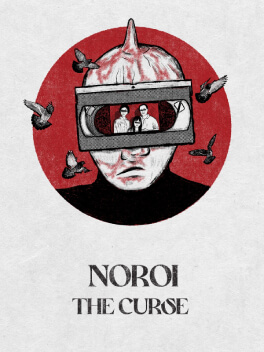
NOROI: The Curse
This film is widely regarded as Shiraishi’s masterpiece in found footage horror. Its meticulous layering of “evidence” and atmospheric tension makes it a must-watch for anyone curious about immersive pseudo-documentaries.
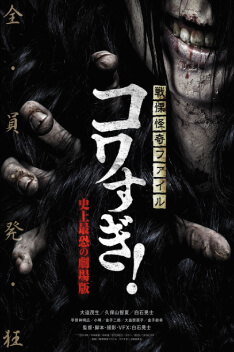
Senritsu Kaiki File Kowasugi!
A project that showcases Shiraishi’s experimental side with short pseudo-documentary episodes. Each segment demonstrates his approach to building dread and manipulating perspective, making it an essential companion for fans of his style.
Final thoughts
We hope this brief look into Textbook of Fake Documentaries has been an interesting read, especially for those of you who, like us, are fascinated by found footage horror and the strange craft behind fake documentary filmmaking.
Kōji Shiraishi remains one of the most distinctive voices in this space, and the existence of a book like this only makes his work feel even more worth exploring. For now, Textbook of Fake Documentaries remains a rare and elusive title, especially here in the UK, which is exactly why we wanted to talk about it.
If any of you have more information about this book, or if you know where it can currently be found, imported, or purchased, please let us know in the comments. Any lead would be genuinely appreciated.
And of course, if we come across new information, or if we manage to track down a copy ourselves, we’ll make sure to update this blog post with everything we find.
RELATED POSTS


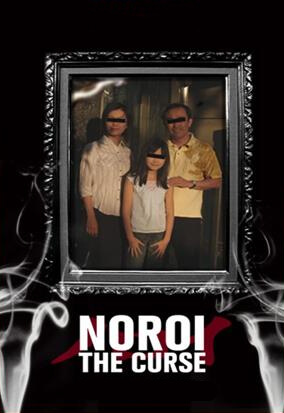
Experience Shiraishi’s masterpiece in found footage horror.